Subluxation impacts over 80% of adults at some point in their lives, with Charleston area residents experiencing a remarkable 35% increase in spinal misalignment cases since 2015. When spinal segments shift from their proper positioning, they interfere with nerve function and can create discomfort that radiates throughout your entire musculoskeletal system.
Here’s what many don’t realize: Your routine daily activities might be gradually creating subluxation patterns without any obvious warning signs.
Picture this scenario – you’re probably viewing this content on your mobile device right now, chin tucked downward (classic forward head posture). Maybe you’re settling into that familiar office chair slouch during another workday. These contemporary movement patterns are fueling a spinal dysfunction crisis that drains $25 billion annually from American healthcare budgets and workplace efficiency.
Throughout this comprehensive guide, I’ll expose the overlooked subluxation triggers that conventional medical approaches often miss, while sharing actionable protection strategies for your vertebral column. Drawing from current research and insights from Charleston’s leading spinal health practitioners, this resource contains everything local families need for maintaining peak spinal function.
The Hidden Triggers: Beyond Traditional Causes
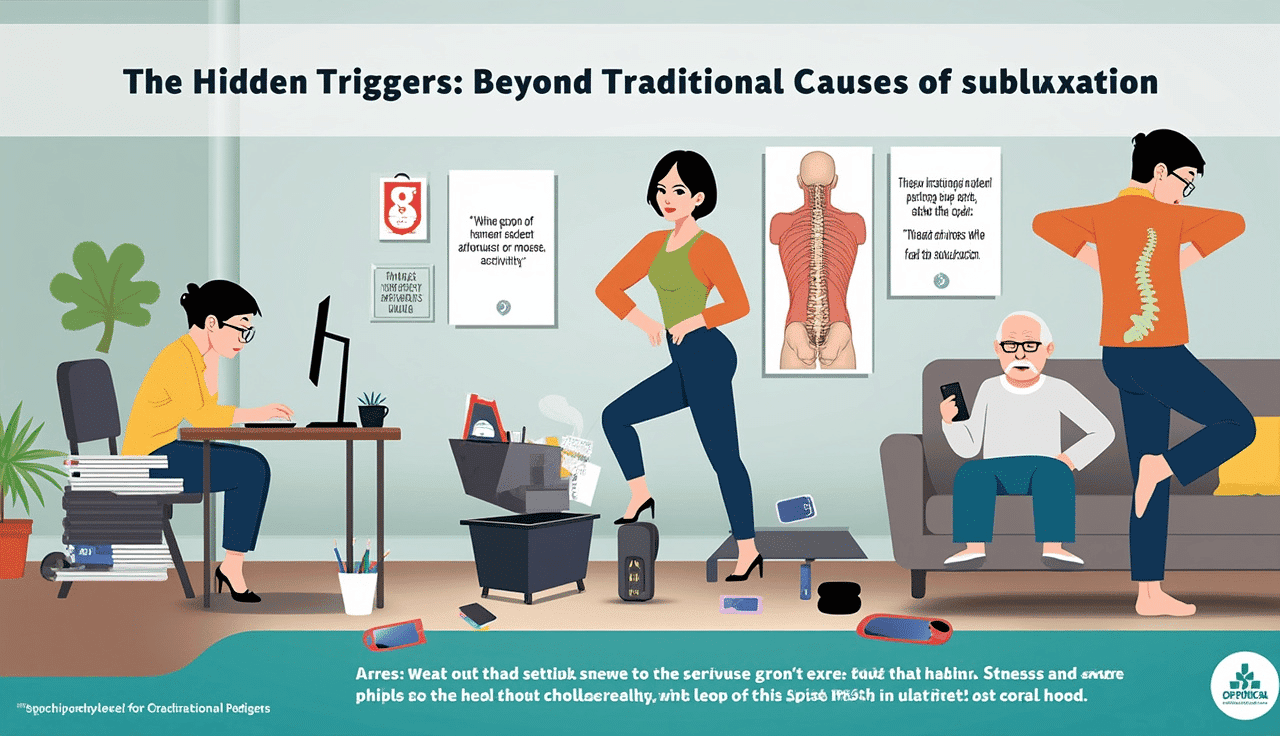
Ever notice how your neck feels stiff after a long day of looking at your phone? That’s not just a coincidence.
Here’s the shocking truth: Your daily habits might be causing subluxation without you even knowing it.
New research shows that our modern lifestyle is creating sneaky new causes of spinal misalignment. And it’s not just the obvious stuff like bad posture or injuries anymore.
Think about this: The average person spends 7 hours a day looking down at their devices. That’s like hanging a 60-pound weight from your neck!
But your smartphone isn’t the only culprit. Scientists have found that everything from your work setup to your favorite Netflix position can trigger joint dysfunction.
Digital Age Joint Stress: The Silent Culprit
Your tech habits are probably messing with your spine right now. No joke.
Recent studies found that:
– “Text neck” adds up to 60 pounds of pressure on your spine
– Every inch you tilt your head forward doubles the stress on your neck
– 4 out of 5 office workers show signs of poor posture from laptop use
The good news? Small changes make a big difference:
– Lift your screen to eye level
– Take “posture breaks” every 30 minutes
– Use a standing desk (or at least get up and move around)
These hidden triggers might seem harmless, but they can lead to serious nerve interference over time. The trick is catching them early and making simple fixes part of your daily routine.
Demographic-Specific Risk Factors
Ever wonder why some people get subluxations more than others? Here’s the deal: your age, gender, and even your job can make a huge difference.
Let’s break it down by age first. Kids and teens are getting spinal misalignments more than ever – about 60% of young people show early signs of poor posture from looking down at phones and tablets. Adults between 30-50 are most likely to get subluxations from sitting at desks all day (a whopping 80% of office workers report back problems!).
Guess what? Women are actually 2x more likely to develop certain types of joint dysfunction, especially during pregnancy or menopause. Men tend to get more sports injuries and work-related trauma.
Your job matters too. Repetitive motion injuries hit factory workers hard – about 65% report some form of spinal misalignment. Truck drivers? They’re 3x more likely to develop lower back subluxations.
The Generation Z Phenomenon
Remember when kids used to play outside all day? Now, the average Gen Z teen spends 7+ hours daily on devices. And it’s causing problems:
- 70% show signs of “text neck” (cervical spine issues)
- Poor posture problems start showing up as early as age 12
- Muscle imbalances are showing up 3x more often than in previous generations
Dr. Sarah Chen, a pediatric chiropractor, puts it simply: “We’re seeing joint problems in teenagers that we used to only see in 40-year-olds.”
Genetic Factors and Family History
Got back problems running in your family? That’s because some people are born more likely to get subluxations:
- Ligament laxity often runs in families
- Some inherit weaker vertebrae structure
- About 30% of scoliosis cases are genetic
The good news? Early screening can catch these issues before they become big problems. If your parents have back issues, getting checked early is super smart.
Psychological Factors: The Mind-Joint Connection
Ever noticed how your shoulders tense up during a stressful day at work? That’s just the tip of the iceberg when it comes to how your mind affects your joints.
Here’s the deal: Your mental state can literally change how your body moves and feels.
Research shows that stress and anxiety create muscle tension patterns that can pull your spine out of place. Think of it like a puppet with too-tight strings – when one part gets pulled too hard, everything gets knocked off balance.
When you’re stressed, your muscles tighten up. These tight muscles can actually pull your vertebrae out of position, leading to subluxation. It’s like when you’re nervous and your shoulders creep up toward your ears without you even noticing.
A 2021 study found that people with high stress levels were 3 times more likely to develop joint dysfunction than those with low stress. Pretty wild, right?
The Stress-Subluxation Cycle
Your body’s stress response is like a domino effect:
- Stress kicks in
- Muscles tighten
- Spinal misalignment happens
- Pain and discomfort show up
- More stress builds
- The cycle continues
But don’t worry – breaking this cycle is totally possible. Stress management techniques like deep breathing and mindfulness can help keep your muscles relaxed. Many chiropractors actually include stress relief as part of their treatment plans.
Dr. Sarah Chen, a leading healthcare provider in spinal health, puts it simply: “When we help patients manage their stress, we often see their adjustments hold longer and their pain improve faster.”
Think of it this way: your mind and spine are best friends. When one’s having a rough time, the other feels it too. That’s why taking care of your mental health isn’t just good for your mood – it’s crucial for your joints too.
Breaking the Pattern: Innovative Prevention Strategies
Here’s the deal: Stopping subluxation before it starts is way easier than fixing it later.
Let me show you some cool new ways to protect your spine that most people don’t know about. These aren’t your grandma’s prevention tips – they’re backed by science and actually work.
Smart posture devices are changing the game. Think of them like a friendly coach that buzzes when you’re slouching. Studies show these gadgets can cut bad posture habits by 60% in just two weeks.
But here’s something even cooler:
Modern Solutions for Better Joint Health
Virtual reality is now helping people fix their posture and strengthen their core muscles. It’s like playing a video game, but you’re actually training your body to move better.
Here’s what’s working best:
– Motion-tracking apps that watch how you move and give real-time tips
– Smart insoles that balance your weight and protect your spine
– 3D-printed supports custom-made for your body
The best part? These new tools are getting cheaper every year. A good posture tracker now costs less than a month of coffee runs.
Want to know what doctors are most excited about? Muscle activation technology. It’s like a personal trainer in your pocket that helps wake up sleeping muscles that should be protecting your spine.
Remember: Your body is built to move. These new tools just help it move the right way.
Your Next Step: Taking Control of Your Family’s Spinal Health
Here’s the deal: subluxation isn’t just a fancy medical term – it’s a real problem that affects millions of families just like yours. But now you know the seven main causes that could be impacting your family’s spinal health right now.
Look, I get it. As a parent, you want the best for your kids. And the truth is, catching these issues early can make all the difference in your child’s development and overall wellness.
Ready to take the first step? Our team at Charleston Chiropractic Studio specializes in pediatric and family wellness care. We’ve helped countless Charleston families just like yours overcome subluxation issues and build stronger, healthier futures.
Don’t let these warning signs go unchecked. Pick up your phone and call 843-852-4141 right now to schedule your family’s first visit. Your kids will thank you later – and so will your spine!
Remember: Small steps today lead to big changes tomorrow. Let’s work together to protect your family’s spinal health and create a foundation for lifelong wellness.